
Retaining Walls
Stone, block & brick walls that hold soil in place & create usable level ground
Making the Most of a Sloped Property
Hills give Fairfield County properties their character, but they also make yards hard to use. Soil creeps downhill after heavy rain, gardens wash out, and a steep backyard can leave you with almost no flat space for a patio, play area or lawn. An old timber or stacked-stone wall that's started leaning makes the problem more urgent, since a failing wall can give way without much warning.
Retaining walls are one of Rob's Lawn's specialties, and the crew has been building them for homeowners across Fairfield County for more than 30 years. Every wall is designed around the height of the slope, the weight of the soil behind it and how water moves through the area, with drainage built in so pressure doesn't build up over time. Taller walls often need town approval, and we help you acquire the permits before construction begins.
Retaining Wall Materials & Styles
Natural Stone Walls
Fieldstone and cut stone echo the old stone walls found throughout Connecticut and blend easily into wooded properties.
Concrete Block Walls
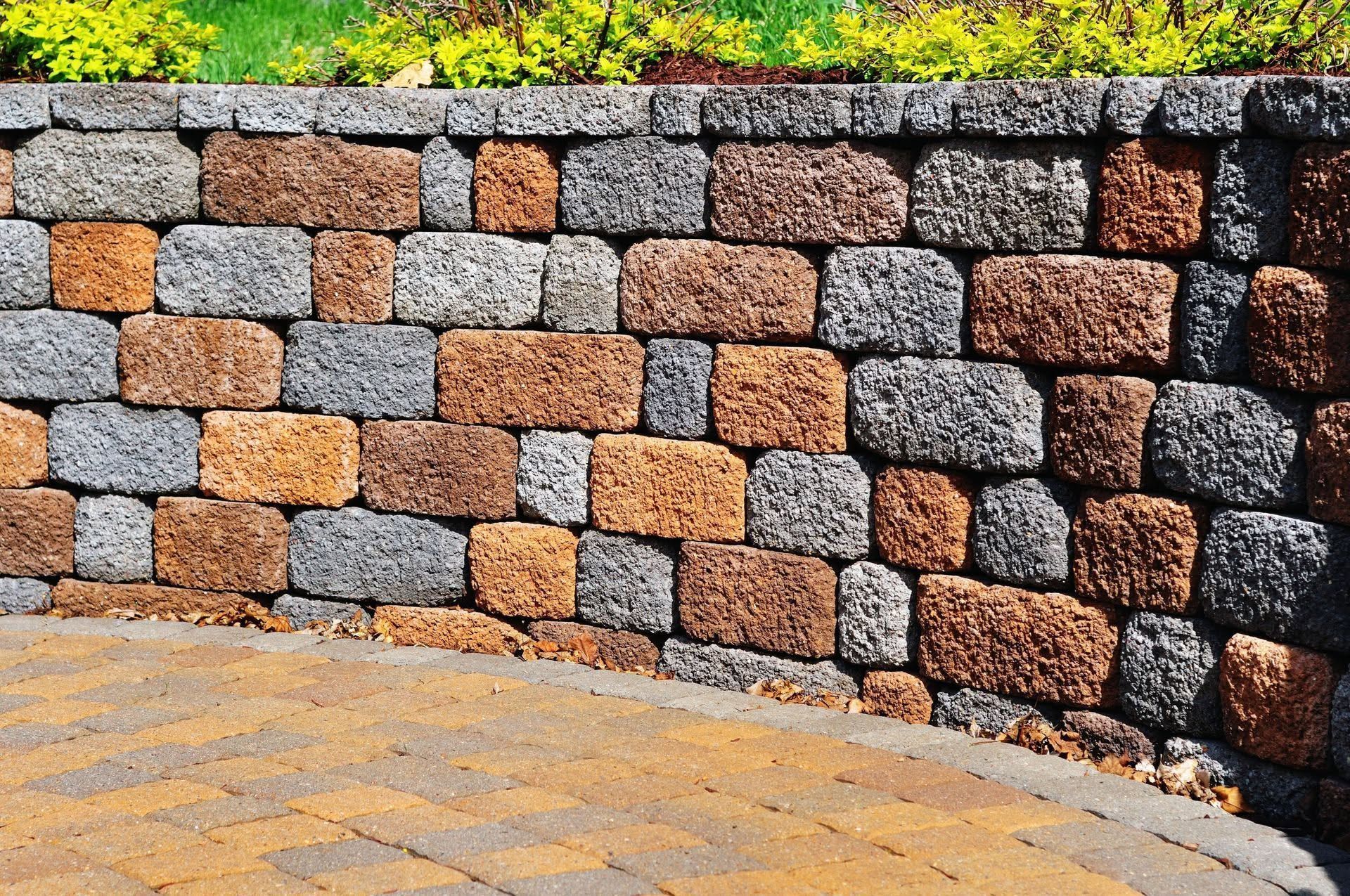
Interlocking block systems are built for strength and come in colors and textures that suit both modern and traditional homes.
Brick Walls
A polished option that pairs well with brick patios, walkways and home exteriors.
Timber & Gabion Walls
Wood offers a natural look for lower walls, while wire baskets filled with stone handle areas where water moves through heavily.
Built-In Drainage
Gravel backfill and drain pipe behind the wall release water pressure and help the structure stay upright for the long term.
How a Retaining Wall Improves Your Yard
A well-built retaining wall does several jobs at once:
- Stops erosion and keeps soil from washing onto driveways and walkways
- Turns steep slopes into level, usable ground
- Redirects runoff away from your house and garden beds
- Defines planting areas and can double as built-in seating
- Gives the whole landscape a finished, structured look
Retaining Wall Questions Before You Build
Do I need a permit for a retaining wall in Connecticut?
Many towns require a permit, and sometimes engineered plans, once a wall passes a certain height or sits near a property line or wetlands. Rob's Lawn helps you work through those requirements before any digging starts.
Why do retaining walls fail?
Most failures come from poor drainage, a weak base or materials that weren't suited to the wall's height. Building in drainage and setting a solid foundation prevents the bulging and leaning you see in older walls.
Can an old leaning retaining wall be repaired?
Shorter sections can sometimes be rebuilt, but walls that are badly leaning or cracked are usually safer to replace. If a wall looks close to collapsing, Rob's Lawn responds within 24 hours.
Level Out Your Sloped Yard
Send details about the slope and intended use, or call/text to discuss. Rob's Lawn will provide a free estimate within one business day.