
Drainage Solutions
French drains, dry wells & grading that move water away from your home
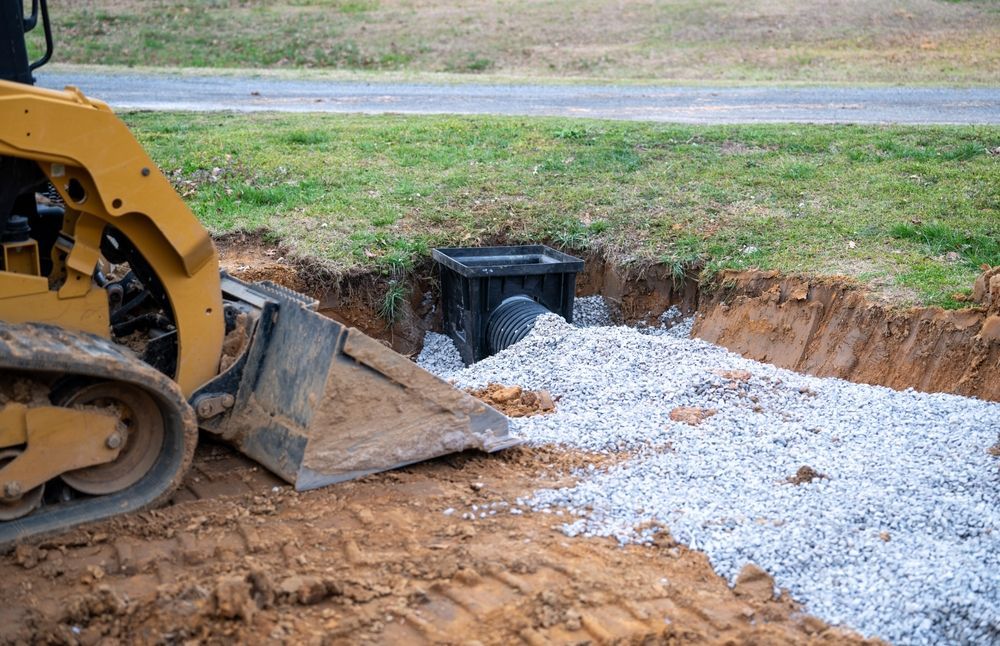
Where Standing Water Comes From
A yard that turns into a swamp after every storm usually has one of a few problems: ground that slopes the wrong way, dense or compacted soil that can't absorb water fast enough, or downspouts emptying right next to the house. Left alone, standing water kills grass, breeds mosquitoes, washes out garden beds and can eventually find its way into a basement or crawl space.
Rob's Lawn starts every drainage job with a close look at how water moves across your property, then builds a fix around what's actually causing the problem. That might mean adjusting the grade, installing a French drain or dry well, working permeable materials into your hardscape, or improving the soil and plantings so the ground soaks up more on its own. Homeowners across Fairfield County count on that approach, and if a project needs a permit, we help you get it.
Common Drainage Solutions for Residential Yards
French Drains
A gravel-filled trench with perforated pipe collects groundwater and carries it to a safer outlet.
Dry Wells
Underground chambers gather runoff from downspouts or low spots and let it soak slowly into the surrounding soil.
Grading & Sloping
Adjusting the pitch of the ground sends rain away from structures instead of letting it settle beside them.
Permeable Materials
Gravel and other permeable surfaces let water pass through rather than run off across the yard.
Soil & Plant Improvements
Amended soil and water-tolerant plants help low areas absorb moisture naturally.
Signs Your Yard Has a Drainage Problem
Watch for these the next time a heavy rain moves through:
- Puddles that linger for a day or more
- Spongy turf or bare patches where grass keeps dying
- Mulch and soil washing out of beds onto walkways
- Water stains, dampness or a musty smell in the basement
- Downspouts dumping water right against the foundation
What to Know About Fixing Yard Drainage
What's the difference between a French drain and a dry well?
A French drain moves water along a trench to an outlet, while a dry well stores runoff underground and lets it disperse slowly. The two are often used together on properties with heavier water problems.
Can poor yard drainage cause basement water problems?
Yes. Water that pools near the foundation can seep through cracks and joints over time, so redirecting it is one of the best ways to protect a basement.
Is emergency drainage service available?
Yes. When water is threatening your home or flooding part of the property, Rob's Lawn responds within 24 hours.
can be hauled away.
Dry Out Your Yard for Good
Identify where water collects and its worst times, and Rob's crew will determine the cause. Contact us for a free estimate within one business day.